
Mechanical surface prep
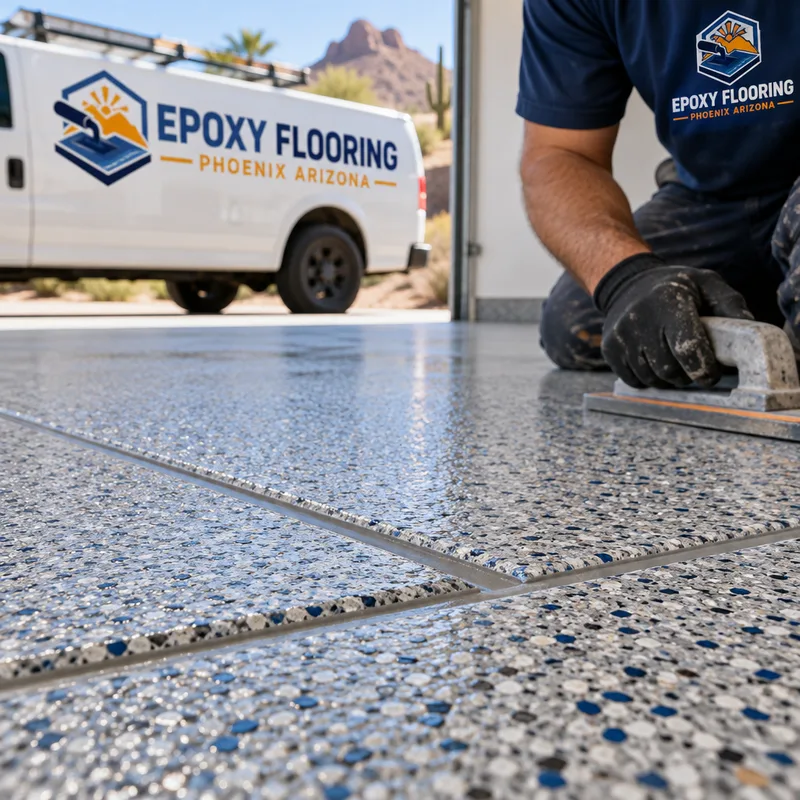
We prep with diamond grinding to open the concrete and remove weak layers, old coatings, and embedded grime so the coating can bond the way it is designed to.
Serving Phoenix, Arizona & surrounding areas
Mon–Fri 8am–6pm · Sat 9am–2pm
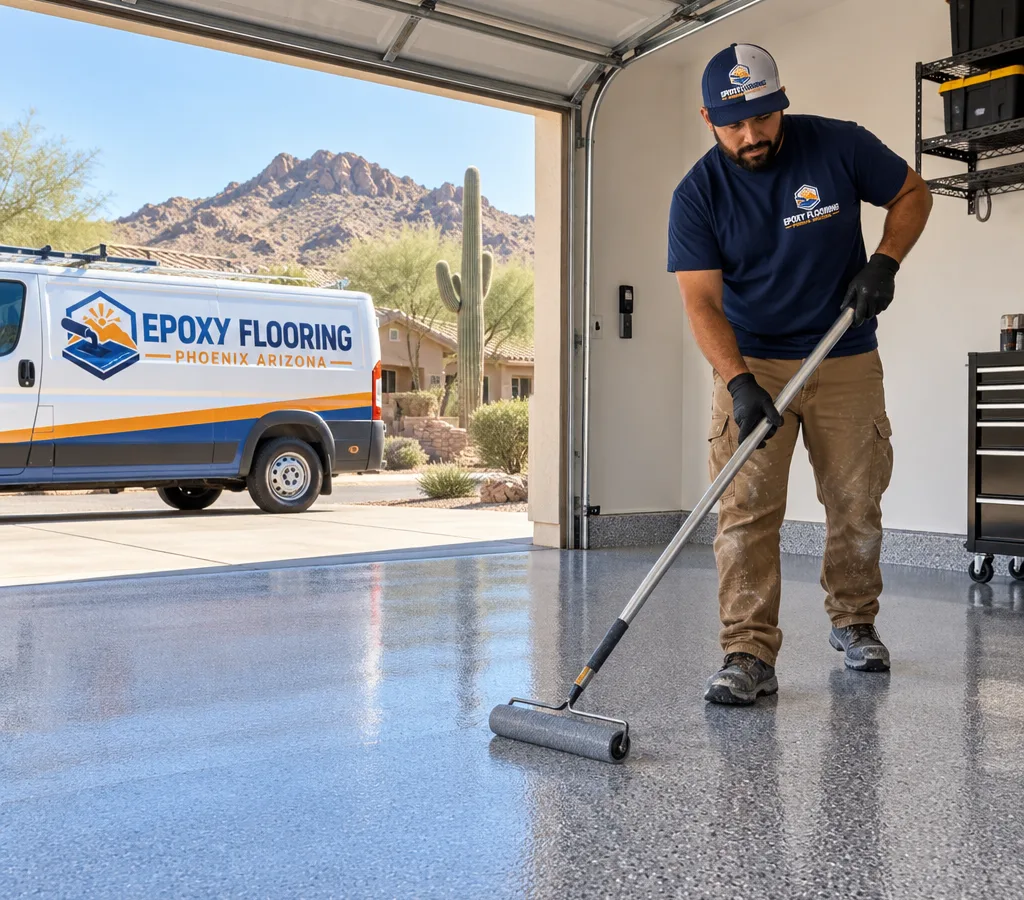
Concrete coating service in Phoenix, Arizona
Protect tired concrete from hot-tire pickup, staining, and dusting with clean, durable finishes built around proper surface prep and a clear written scope.
Built from the concrete up
If you are searching for concrete coating Phoenix AZ, you are probably dealing with one of the usual problems: dusty concrete that never stays clean, oil spots that keep spreading, or a surface that is wearing down where tires and foot traffic hit it most.
In Phoenix, heat and UV matter, but what usually makes or breaks a coating is what is happening at the concrete itself. Many garage and shop slabs have curing compounds, old paint, or contaminated spots from brake fluid, fertilizers, or lawn equipment. Some slabs have hairline cracks or small spalls that will telegraph through a coating if they are not addressed first. A good coating system is built around mechanical grinding (not acid washing), moisture awareness, and the right material for the way the space is used.
Epoxy Flooring Phoenix Arizona installs concrete coatings across Phoenix (ZIP 85013 and nearby areas) for garages, patios, workshops, and light commercial spaces. The goal is simple: a floor that is easier to clean, resists staining and abrasion, and looks intentional, not like a weekend roll-on kit.
Systems, finishes and fit
We prep with diamond grinding to open the concrete and remove weak layers, old coatings, and embedded grime so the coating can bond the way it is designed to.
Hairline cracks, small chips, and divots can be repaired so the finish reads clean. Some slab movement is normal; we set expectations up front on what can reappear over time.
Garages with hot tires and vehicle fluids, patios with sun exposure, and shops with rolling loads do not always need the same system. We recommend the coating based on how you actually use the space.
Good concrete coatings look even at the perimeter, around door thresholds, and at transitions. We pay attention to cut lines, terminations, and uniform coverage.
You should know what prep is included, what gets repaired, what coating layers are used, and what cure time to plan for before any work starts.
Applications and options
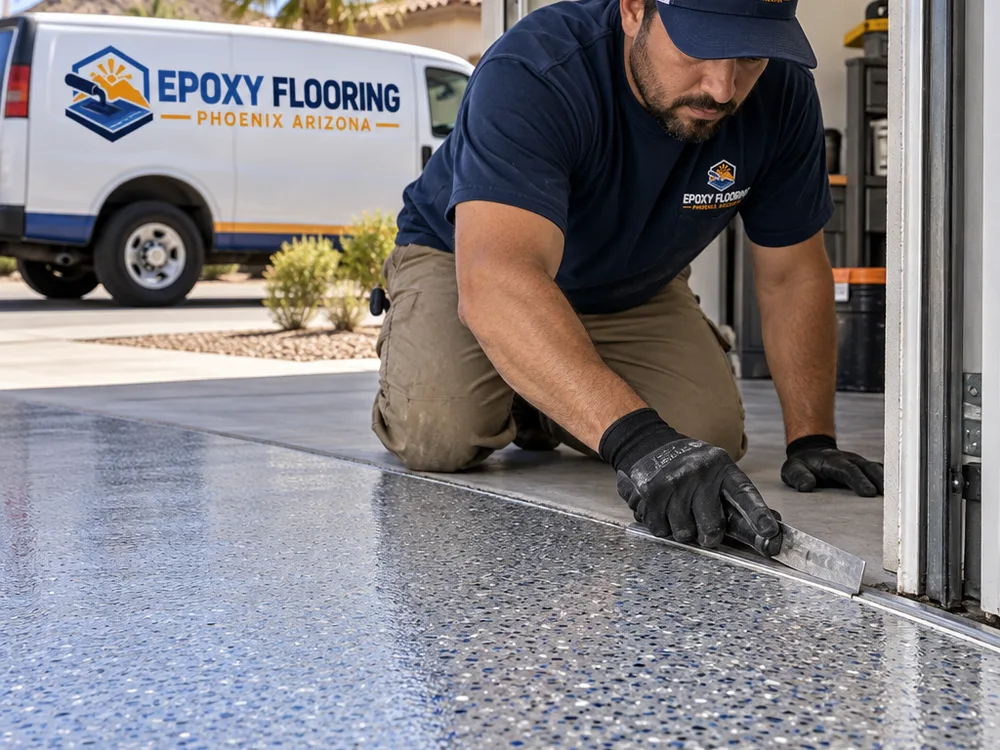
Most coating requests fall into a few common spaces, each with its own constraints.
Garages: Hot-tire pickup, oil and coolant drips, and daily traffic are the big issues. We focus on prep and a system that holds up under vehicle heat and turning tires.
Patios and walkways: Sun exposure and windblown grit can be tough on finishes. For exterior areas, we talk through traction, glare, and how the surface will be cleaned without damaging the coating.
Workshops and home gyms: Rolling toolboxes, weights, and dragged equipment can chew up a weak surface. A tougher topcoat and the right texture help prevent wear tracks.
Small commercial and service bays: Downtime matters. We review scheduling, cure windows, and how to stage access so your operation is not stuck longer than it needs to be.
If you are also comparing full epoxy flooring options, we can explain where epoxy fits and when another coating chemistry makes more sense for your slab and how you use the space.
Preparation determines performance
We look at slab condition, existing coatings, stains, and cracks. We also confirm how the space is used (parking, chemicals, rolling loads, sun exposure) so the coating system matches reality.
We mechanically grind to achieve the right concrete surface profile (CSP). This step removes weak concrete, opens pores for bonding, and exposes areas that need repair.
We address cracks and surface defects that affect the look and durability of the finished floor. Edges, joints, and transitions are prepped so the coating does not fail at the perimeter.
We apply the coating system in the planned layers, watching working time and film build. If decorative flakes or texture are part of the scope, they are installed consistently so the floor reads even.
You get a practical cure timeline for foot traffic and vehicles, plus cleaning guidance (what to use and what to avoid) so the finish stays looking good.
Most concrete coating projects in Phoenix typically range from about $5 to $12 per square foot, depending on prep needs and the coating system selected. A straightforward one-car garage is often at the lower end, while larger garages, workshops, and decorative multi-layer systems land higher.
Final pricing changes with slab condition (cracks, spalling, contamination), square footage, moisture risk, edges and stem walls, and whether an existing coating must be removed. The exact cost is confirmed after an on-site evaluation so the scope matches what the concrete actually needs.
Book Your Free InspectionApplications and finish details
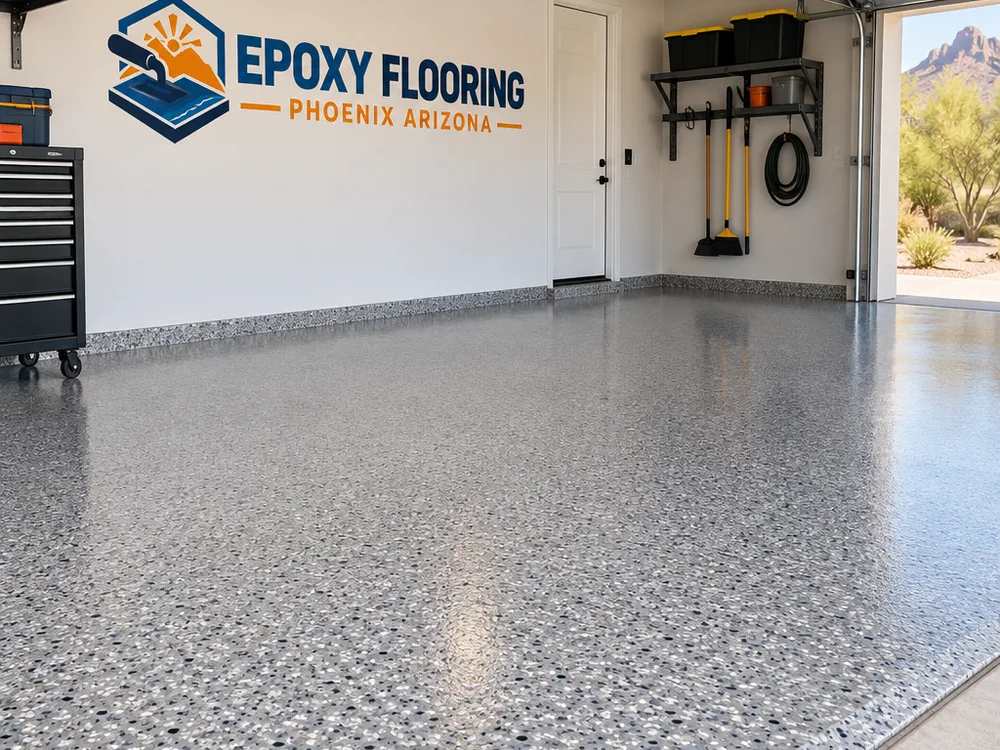
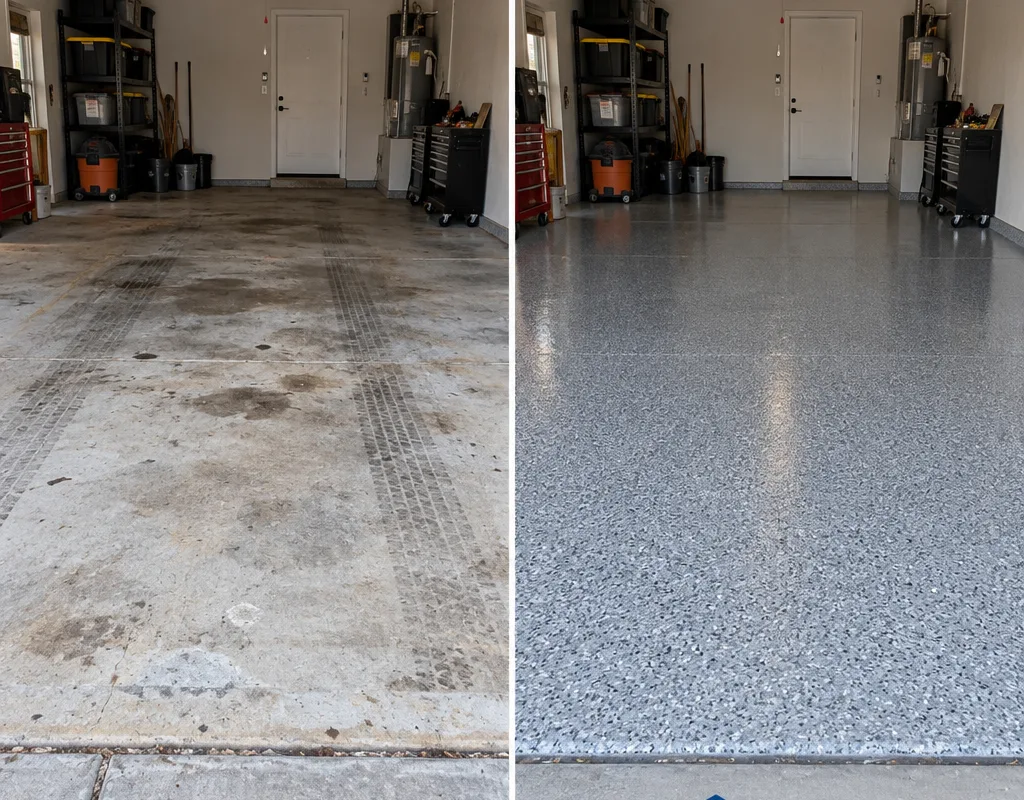
Homeowner proof
“Our garage slab had oil stains and a couple of cracks. They explained what would still show and what could be repaired, then the finished coating came out even and easy to mop.”
“We use our shop daily and needed something that would handle rolling equipment. The prep work was thorough, and the surface has been holding up well under traffic.”
“What I liked most was the clear plan for cure time and when we could park again. No confusion, and the edges along the door and walls look clean.”
Answers before installation
Most garage and small shop coatings are completed in 1 to 2 days, then need cure time before vehicles return. The exact schedule depends on repairs, coating chemistry, temperature, and whether an old coating must be removed during prep.
Yes, mechanical grinding is the standard approach because it creates the concrete surface profile needed for bonding and removes weak concrete, sealers, and contaminants. Acid etching alone is rarely enough for a durable coating on a garage or shop slab.
Coatings can cover color variation and small surface flaws, but they will not magically erase structural cracks or significant pitting without repair work. We can fill many cracks and divots as part of the scope, and we will tell you what may telegraph through after the slab moves with normal temperature changes.
They can be if the finish is too smooth, especially with water or fine dust on the surface. Traction is controlled by topcoat choice and texture or aggregate options, and we recommend the right approach based on whether the area is a garage, patio, or walkway.
Often yes, but it depends on how deep the contamination is and what the old coating is. The prep step (grinding and targeted cleaning) is where we find out what will come out of the concrete and whether additional removal or repair is needed for the new coating to bond.
Regular sweeping or dust mopping helps because desert dust acts like grit under shoes and tires. For washing, a pH-neutral cleaner and a soft brush or microfiber mop works well; harsh degreasers and strong acids can dull some topcoats over time.
Start with an on-site slab inspection
Tell us how you use the space and what shape the slab is in. We will recommend a coating system, outline the prep and repairs, and give you a clear plan for scheduling and cure time.