
Gloss level you can live with
Concrete polishing is not one look. You can choose a satin finish for lower glare, or a higher sheen for showrooms and lobby areas where reflection is part of the design.
Serving Phoenix, Arizona & surrounding areas
Mon–Fri 8am–6pm · Sat 9am–2pm
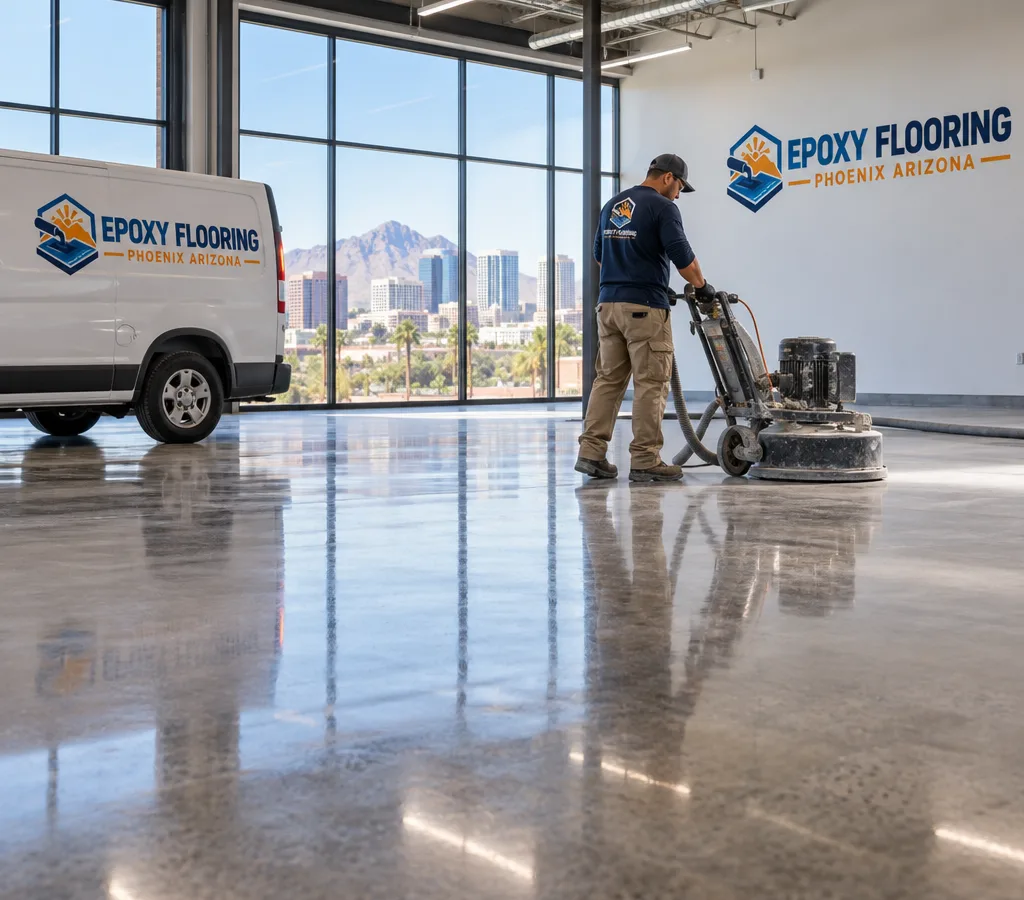
Concrete polishing service in Phoenix, Arizona
Turn plain concrete into a clean, reflective floor that holds up to daily traffic and cleans up fast. Get a clear scope, honest options, and a finish level that fits your space.
Durable by design
Phoenix concrete polishing is a practical way to get a durable, modern floor without adding a coating that can peel or yellow. Polished concrete is the concrete itself, mechanically refined with industrial diamonds and densifier until it closes up, hardens, and reaches the sheen level you choose.
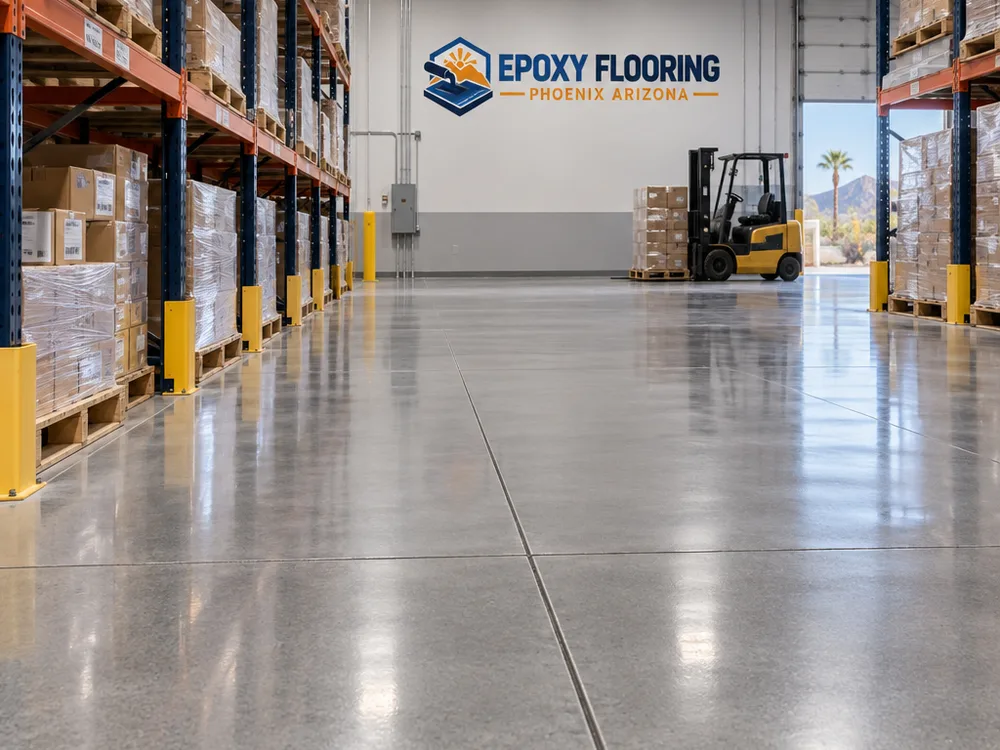
In Phoenix, that matters because dust and tracked-in grit are constant. A properly polished slab has fewer pores for dirt to lodge in, so routine cleaning is simpler, and the floor stays looking sharp with basic maintenance. It is a strong fit for garages, retail, offices, showrooms, warehouses, lobbies, and many residential interiors when the slab condition supports it.
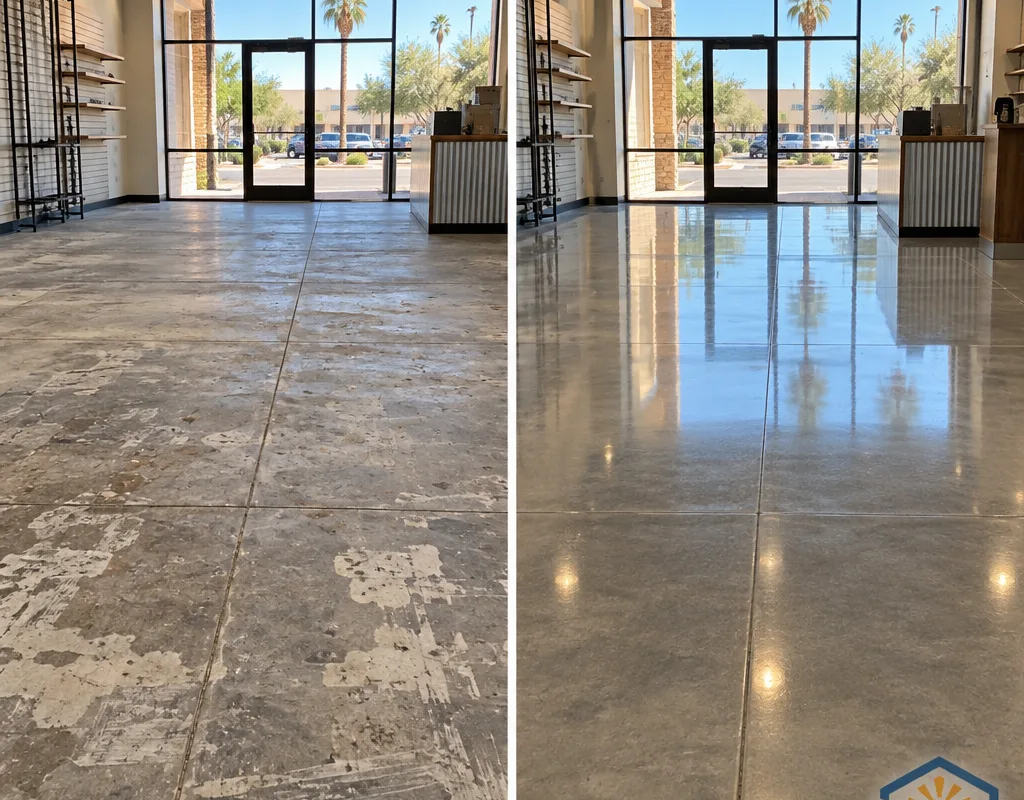
Epoxy Flooring Phoenix Arizona handles concrete polishing in Phoenix, AZ with a process built around what your slab can realistically deliver. If the concrete has patchwork, old adhesive, or inconsistent finishing, we will talk through what can be corrected, what will remain visible, and what finish level will look best in your lighting.
Systems, finishes and fit
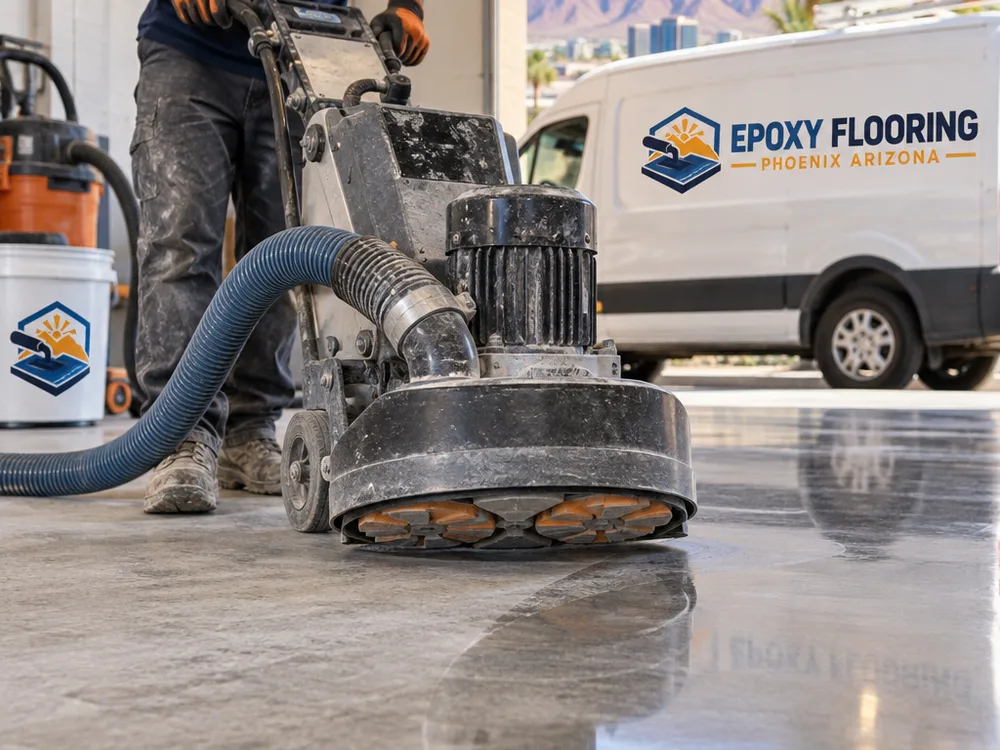
Most concrete polishing projects follow the same core steps, with the exact sequence adjusted for the slab condition and the final gloss.
1) Evaluation and protection: We look for cracks, spalls, moisture-related issues, and existing coatings or mastic. We also plan protection for walls, thresholds, and adjacent finishes.
2) Prep and initial grinding: We remove surface contaminants and flatten high spots using metal-bond diamond tooling on a planetary grinder. This is where old paint, glue, thinset, and many surface defects get addressed.
3) Repairs and joint work: Cracks and divots are filled or repaired with products suited to concrete movement and the look you want. Joint fill can help reduce edge chipping and make cleaning easier.
4) Densifier application: A lithium or sodium silicate densifier is commonly used to harden the surface and improve abrasion resistance. The slab is then refined with progressively finer diamonds.
5) Final polishing and guard (as needed): We bring the floor to the agreed sheen level and can apply a stain guard where appropriate for your use case.
For occupied spaces, dust control and jobsite cleanliness are part of the plan, especially for retail and office work where foot traffic never fully stops.
Applications and options
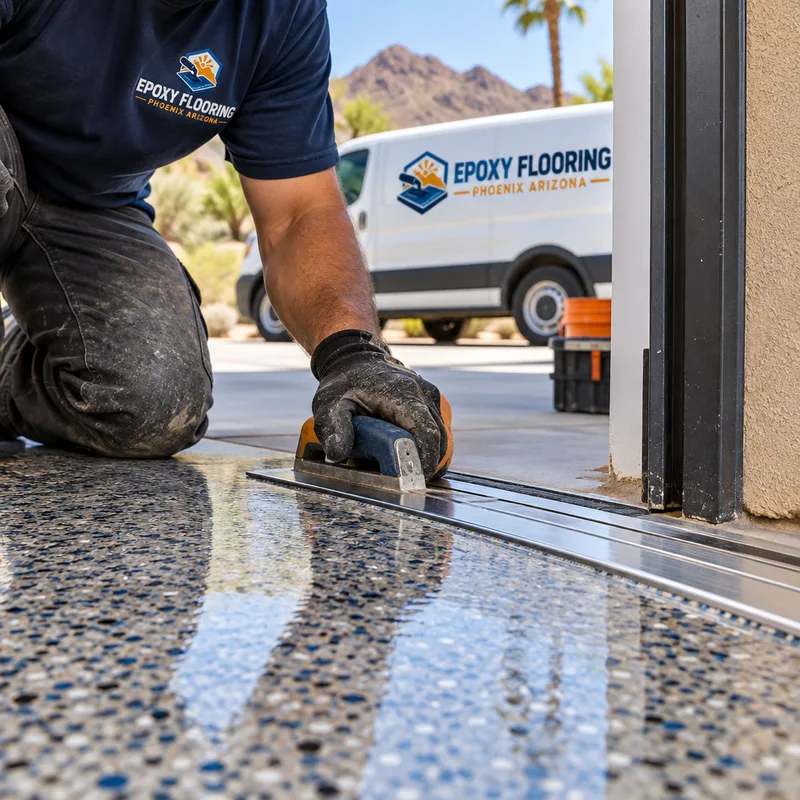
Concrete polishing is not one look. You can choose a satin finish for lower glare, or a higher sheen for showrooms and lobby areas where reflection is part of the design.
Some floors keep a more uniform surface (cream polish), while others cut deeper to reveal sand and aggregate. The slab determines what is achievable and what it will look like.
Color can be added for a more decorative floor. The best approach depends on slab porosity, existing patching, and whether you want variation or a more consistent tone.
Entryways, main aisles, and loading paths wear faster. We can target the polishing schedule and protective products around where your floor gets punished the most.
A polished floor can be safe when it is maintained correctly and kept free of contamination. We discuss traction expectations, cleaning products, and where mats make sense.
New concrete can be polished, but it still needs the right finish and cure plan. Existing slabs can polish well, but removal and repair work often drives the scope.
Preparation determines performance
We confirm how the space is used, what look you want, and what matters most: easier cleaning, higher reflectivity, better abrasion resistance, or minimizing visible patching.
We assess cracks, spalling, prior coatings, adhesive residue, and the overall flatness. This is also where we flag areas that may telegraph through the final finish.
You get a clear scope that matches the grind level, expected aggregate exposure, and sheen. If color or guard is included, it is specified so the finish is predictable.
We run the polishing sequence with dust control and staged tooling changes. Repairs are blended as much as the concrete allows, then the slab is densified and refined to the final grit.
We review the floor in the actual lighting, confirm edges and transitions, and leave you with practical maintenance guidance (pads, cleaners, and what to avoid).
Concrete polishing in Phoenix typically ranges from about $3 to $8 per square foot for many projects, with small spaces and heavy prep sometimes pushing higher. A straightforward, larger open slab is often at the lower end, while deep grinding to remove coatings, major crack repair, and higher-gloss finishes increase cost.
Your final price depends on square footage, slab condition, existing adhesive or coatings to remove, repair needs, edge work, access, dust-control requirements in occupied buildings, and the finish level (cream polish vs more aggregate exposure). The exact cost is confirmed after an on-site evaluation of the concrete.
Book Your Free InspectionApplications and finish details
Homeowner and business proof
“We had old glue and patchwork from previous flooring, and the team explained what would still show and what would blend. The final polish looks intentional and it is much easier to keep clean.”
“They worked around our business hours and kept dust under control. The sheen is consistent across the floor and the walk-through covered exactly how to maintain it.”
Answers before polishing
Most concrete polishing jobs take 1 to 3 days once prep starts, but the schedule depends on square footage and how much grinding and repair the slab needs. A clean, open area with minimal coating removal moves faster than a space with old glue, paint, or extensive cracking. We confirm timing after we see the concrete and understand access and hours for your Phoenix property.
Yes, cracks and spalls can usually be repaired before polishing, but some movement and some color variation in repairs should be expected. We can fill and blend many defects, and we will tell you up front which areas may remain visible after polishing because the slab has shifted, settled, or been patched over time.
Polished concrete can be safe, but traction depends on what is on the surface and how it is cleaned. Water, dust, and oils change slip risk on any hard floor, and high gloss can increase the perception of slipperiness. We discuss finish level, cleaning products, and entry mat strategies so the floor fits the way your space is used.
In many cases, yes, but removal level affects both the schedule and the final appearance. Aggressive grinding to eliminate mastic and coatings can increase aggregate exposure and may reveal staining that was hidden. During evaluation we look at what is on the slab and recommend a polishing approach that matches the look you want and the condition you actually have.
Satin is a popular choice for practical areas because it hides dust and traffic patterns better, while high gloss is often chosen for showrooms, lobbies, and presentation spaces. The best option depends on lighting, expected foot traffic, and how often the floor will be cleaned. We can show you the difference in sheen so the choice is based on what you will see every day.
Maintenance is straightforward: dry dust mop regularly and wet clean with a neutral cleaner and the right pad for your sheen level. Avoid harsh degreasers and acidic cleaners that can dull the surface or strip protective guards. Because Phoenix dust is a constant, consistent dust control at entries and routine cleaning does more for appearance than occasional heavy scrubbing.
Yes, we polish concrete for homes and businesses, and we adjust the plan based on occupancy, hours, and traffic needs. Commercial work often requires tighter dust control and phased scheduling, while residential work often focuses on appearance details like patch visibility and transitions at doorways. If you are also comparing coating options for a garage or workspace, our Epoxy Flooring work is a separate path with different performance and appearance tradeoffs.
Start with an on-site slab inspection
Tell us what space you are polishing and what look you want. We will evaluate the slab, explain realistic finish options, and provide a written scope for your Phoenix concrete polishing project.