
Spalling, pop-outs, and rough finishes
We remove loose material, repair to a sound base, then resurface for a smooth, consistent profile that is easier to clean and safer to walk on.
Serving Phoenix, Arizona & surrounding areas
Mon–Fri 8am–6pm · Sat 9am–2pm
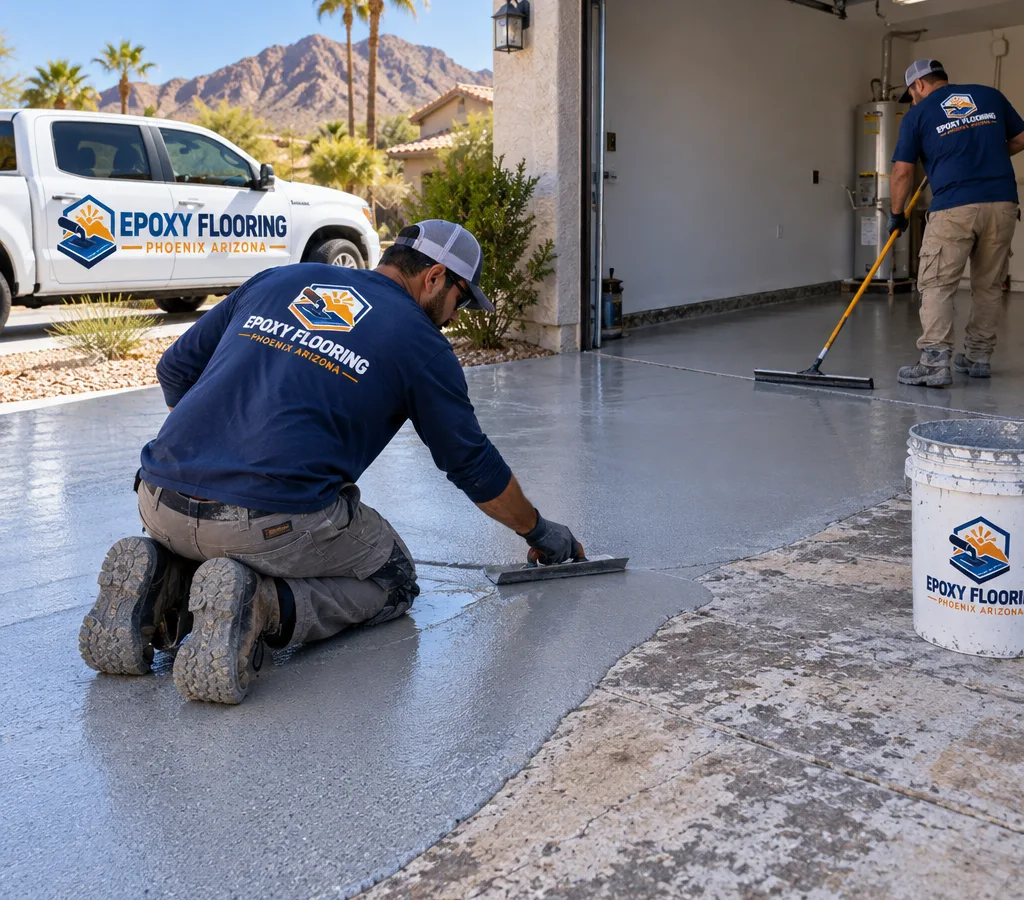
Concrete resurfacing service in Phoenix, Arizona
Restore worn, stained, or uneven slabs with a new, bonded surface that holds up to daily use, hot tires, and Arizona sun. Get a clear scope, honest prep plan, and a finish that fits your space.
Restore the surface, preserve the slab
If you are searching for concrete resurfacing Phoenix homeowners actually trust, you are probably looking at concrete that is structurally there, but ugly or uncomfortable to live with. Common issues around the Valley include surface spalling, tire marks, old coatings peeling, hairline cracking, pop-outs, and slabs that feel rough or dusty.
Concrete resurfacing addresses the surface problems without the mess and cost of a full tear-out, when the slab is still sound. The goal is simple: correct the surface profile, repair problem areas, and install a new wear layer that bonds to the existing concrete.
At Epoxy Flooring Phoenix Arizona, our resurfacing work starts with the part that decides the outcome: diagnosis and prep. Phoenix heat cycles, intense UV, and hot tires in garages and driveways can punish weak coatings and poorly prepped overlays. We plan the system around your slab condition, your use, and the exposure—sun, water, and vehicles—then build it so it stays put.
Systems, finishes and fit
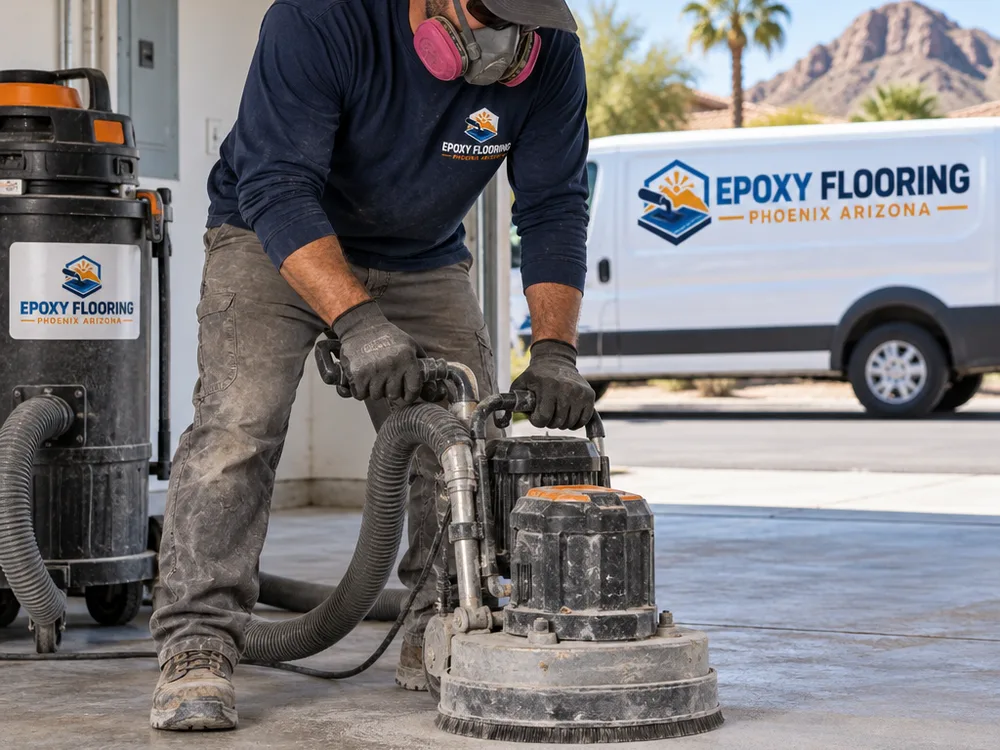
Most resurfacing projects follow the same fundamentals, even though the finish can look very different.
Slab evaluation: We look for movement cracks, hollow spots, contamination such as oil, tire plasticizer and salts, moisture signs, and previous coatings. Resurfacing works best on stable concrete. If cracks are actively moving or sections are heaved, the plan changes.
Mechanical surface prep: For long-term bond, we prep by grinding to open the concrete and remove weak material. This is also when we address old paint, adhesives, mastics, and failed coatings.
Repairs and profiling: Cracks and pits are routed, cleaned, and filled with appropriate repair materials. We correct low areas when feasible, and we feather edges to avoid visible transitions.
Resurfacing layer and finish: Depending on the space, we may install a cementitious overlay, a polymer-modified resurfacer, or a resinous system such as epoxy with a broadcast and protective topcoat. In garages and workshops, a properly built epoxy system often provides the most durable, cleanable surface.
If you are comparing options, epoxy flooring in Phoenix is often chosen when you want strong chemical resistance, easier cleaning, and a finished look that holds up under vehicle traffic.
Applications and repair options
We remove loose material, repair to a sound base, then resurface for a smooth, consistent profile that is easier to clean and safer to walk on.
Cracks are prepped and treated based on their behavior. Some can be repaired cleanly; some need a design approach that disguises future movement.
Failed paint and DIY coatings usually fail at the bond line. We grind back to clean concrete and rebuild with a system designed for that environment.
Contamination is addressed during prep and cleaning, then sealed under a coating system suited for vehicle heat and common garage chemicals.
Resurfacing blends repairs into a uniform finish so the slab reads as one surface instead of a collection of patches.
Built for Valley exposure
Phoenix concrete takes a beating from sun, heat, and hard daily use. Those conditions change what works.
Hot tires and drive-on heat: Garage floors and driveways can see high surface temperatures. Coating selection and cure timing matter, and prep has to remove contaminants that cause tire pickup.
Intense UV exposure: Exterior slabs and patios need UV-stable topcoats or finishes that are meant to live outside. Many interior-grade coatings will amber or chalk in sun.
Dust and wind-blown debris: In areas near major corridors like I-10 or Loop 101, fine dust finds its way into everything. We plan containment, dust collection, and timing so the finish stays clean during application.
Monsoon rain and drainage: Sudden storms can push water into garages, patios, and pool decks. If water crosses the slab regularly, we discuss texture, slip resistance, and where resurfacing should stop so water is not trapped against thresholds.
Neighborhood-to-neighborhood, we see different patterns. In Arcadia and the Biltmore area, prior driveway and patio repairs often make a cleaner, more uniform look the priority. Ahwatukee outdoor spaces call for UV-stable finishes and comfortable barefoot textures. Downtown and midtown courtyards and parking pads require dust control and careful access planning, while larger North Phoenix garages make scheduling and traffic management a bigger part of the plan.
Preparation determines performance
We look at the slab condition, how the area is used, and any previous coatings or repairs. You get a clear plan for prep, repairs, and the finish system.
We protect walls and adjacent surfaces as needed, then mechanically prep the concrete by grinding to the right profile for bonding.
Cracks, pits, and spalls are repaired with materials matched to the system. Edges and transitions are detailed so the resurfacing looks intentional.
We apply the resurfacing layer or coating system, then the final protective topcoat. Texture can be adjusted for grip where needed.
We confirm cure timing for foot and vehicle traffic and explain cleaning and maintenance so the surface stays looking good.
Concrete resurfacing in Phoenix typically ranges from about $4 to $12 per square foot, with decorative overlays or heavy repair work sometimes running higher. A small patio or walkway is often on the lower end, while garages and driveways with coating removal, crack repair, and topcoats tend to price higher.
Your final cost depends on square footage, slab condition, amount of grinding needed, crack and spall repairs, moisture or contamination issues, and the finish system—cementitious overlay or resinous coating. The exact price is confirmed after an on-site evaluation of the concrete and access.
Book Your Free InspectionHomeowner proof
“Our garage slab had old paint, oil stains, and several cracks. The crew ground everything down, repaired the bad spots, and the new surface looks clean and even. We were able to park inside again after the cure time they gave us.”
“We wanted the patio to look uniform again after years of patching. The resurfacing covered the mismatched repairs and the texture feels good underfoot. The prep work was clearly the difference.”
Answers before resurfacing
Yes, concrete resurfacing can perform well in Phoenix, AZ heat when the slab is properly prepped and the finish system is selected for temperature and UV exposure. The biggest failures we see come from skipping mechanical prep or using coatings not suited for hot tires or exterior sun.
Most garage resurfacing projects take 1 to 3 days of active work plus cure time, and driveways can be similar depending on repairs and the finish. The schedule depends on the amount of grinding, how many cracks and spalls need repair, and the cure requirements of the overlay or coating.
Sometimes, but only if the existing coating is firmly bonded and compatible with the new system, which is uncommon with older paint or DIY products. In many cases, the right approach is to grind off the old coating to clean concrete so the new resurfacing bonds reliably.
Resurfacing can hide repaired cracks, but it cannot stop a crack that is still moving from showing again. If we see signs of movement, we will recommend a repair and finish approach that manages that risk, instead of pretending any coating can lock a slab in place.
A concrete overlay is a cementitious resurfacing layer that can rebuild texture and minor profile issues, while epoxy is a resinous coating system that creates a sealed, chemical-resistant wear surface. Many Phoenix garages benefit from resinous systems, while patios and walkways may lean toward overlays depending on appearance goals and exposure.
It can be, as long as the finish is chosen for outdoor exposure and slip resistance. Pool decks and patios often need UV-stable topcoats and a texture profile that stays comfortable while providing traction when wet.
Start with an on-site slab inspection
Tell us what you want to fix and how the space is used, and we will recommend a resurfacing approach that matches the slab condition and Phoenix conditions, with a written scope before any work starts.